

A bezel engagement ring is often chosen for how it looks, but its appeal goes beyond appearance. The setting combines structure, security, and a clear visual identity in a way that feels both practical and considered.
As preferences shift within modern engagement rings, this balance is becoming more relevant.
Design today is not only about how a ring is seen, but how it performs over time. That is where bezel settings stand out.
Structure That Feels Intentional
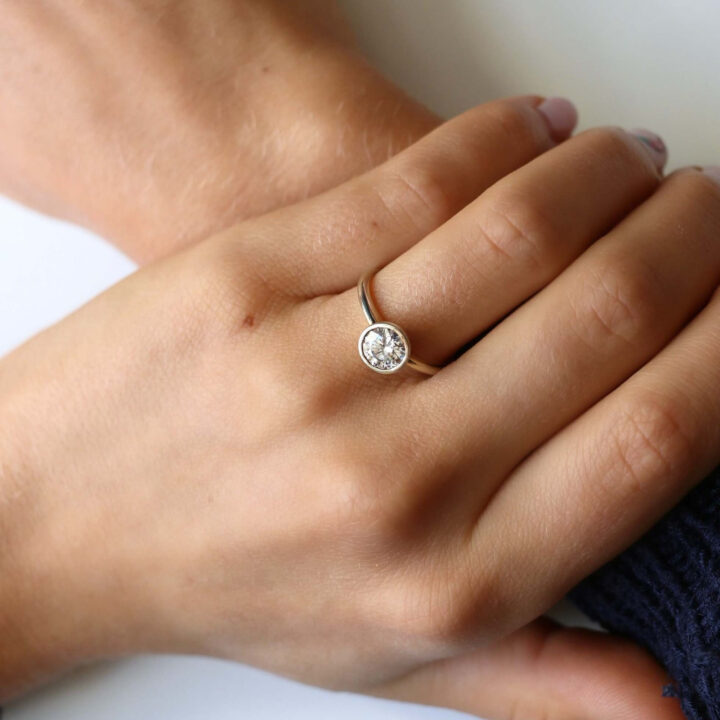
At its core, a bezel-set engagement ring is defined by a continuous rim of metal that surrounds the diamond. This construction creates a clean outline, but it also requires precision.
The metal must follow the exact contour of the diamond, leaving no room for imbalance.
This level of control is what gives the bezel its distinct presence. The diamond is not simply held in place. It is framed in a way that feels integrated into the design.
Designers who focus on proportion and structure often gravitate toward this setting. Jean Dousset approaches bezel rings with this same perspective, applying a disciplined approach to how the metal and diamond interact. The result is a setting that feels composed rather than decorative.
Security as Part of the Design
One of the defining advantages of a bezel engagement ring is how securely the diamond is held. Because the metal surrounds the edges, there is less exposure compared to traditional prong settings.
This makes the ring well-suited for everyday wear.
However, security alone does not define the bezel. What makes it effective is how that function is built into the design itself. The setting does not appear reinforced or heavy.
Instead, the structure feels balanced.
The Elle Bezel Solitaire Engagement Ring, from Jean Dousset, reflects this approach. Its high-polish bezel creates a smooth, continuous frame around the center diamond, offering both protection and a streamlined silhouette. The design feels cohesive, with each element working in alignment.
A Different Kind of Presence
Unlike prong settings that lift the diamond, a bezel-set engagement ring tends to sit closer to the finger. This changes how the ring is perceived. The profile feels grounded, and the diamond becomes part of the overall form rather than sitting above it.
This lower profile also makes the ring more adaptable. It integrates easily into daily wear and feels consistent across different settings. Within engagement rings for women, this quality has contributed to the growing interest in bezel designs.
Jean Dousset’s interpretation of the bezel maintains this balance. The setting does not compete with the diamond. It supports it by defining its outline and reinforcing its shape.
Precision in Metalwork

The success of a bezel setting depends heavily on craftsmanship. The metal edge must be smooth, even, and consistent throughout. Any variation becomes immediately visible.
This is where well-crafted engagement rings distinguish themselves. The transition from band to bezel must feel seamless. The thickness of the metal must be carefully controlled so that it frames the diamond without overwhelming it.
Jean Dousset applies this level of precision across its bezel designs, ensuring that the setting remains aligned with the overall proportions of the ring. The result is a piece that feels complete from every angle.
Function That Enhances Design
The strength of a bezel engagement ring lies in how the function and design work together. Security, comfort, and structure are not added features. They are built into the setting itself.
This is what gives the bezel its lasting relevance. It does not rely on additional elements to create impact. Instead, it focuses on how each part of the ring contributes to the whole.
Within modern engagement rings, this approach reflects a broader shift toward designs that feel intentional and adaptable. Rings are no longer chosen only for how they appear in a single moment, but for how they perform over time.
A Considered Approach to Modern Rings

As more couples explore alternatives to traditional settings, the bezel continues to stand out for its clarity and consistency. It offers a different way of thinking about design, one that prioritizes structure without sacrificing presence.
Jean Dousset’s engagement rings collection demonstrates how bezel settings fit within a wider design language centered on proportion and craftsmanship. Each ring is shaped with attention to how it will be worn, not just how it will be seen.
A bezel-set engagement ring is not simply a variation of a classic design. It is a deliberate choice, shaped by how the ring feels, functions, and fits into everyday life.