

Buying a new launch condo in Singapore moves through a clear sequence of events, yet many buyers still feel a little lost once they start. There are brochures, balloting, price releases, bookings, progressive payments, construction updates, and finally, the day you pick up your keys. The entire process stretches across several years, so having a grounded view of each stage helps you steer the purchase without stress.
Today, we will walk you through the full timeline from the first developer preview all the way to the Temporary Occupation Permit.
The Early Stage: When a Project First Appears

A new launch usually begins long before the public sees the showflat. Developers buy land through government land sales or private collective sales.
Early previews often surface quietly, as seen with projects like Lentor Gardens Residences, where the first signs of activity appear long before the public steps into a showflat.
Once planning approvals move forward, the project starts taking shape behind the scenes. Buyers only meet the project once it’s almost ready for preview.
Land Acquisition and Planning Work
You never see most of this phase, yet it sets the foundation.
Developers typically secure land, refine architectural designs, apply for planning permission, and align project details with regulations.
By the time the public hears about a development, the team has already spent months sorting out layouts, stack orientations, unit mixes, shared facilities, and pricing targets.
Early stages of projects like Newport Residences show how much groundwork happens long before the public hears anything.
Market Teasers Before the Preview
You may spot early marketing hints once approvals line up. These can appear on property portals, developer mailing lists, or social media. It’s usually light on detail. You get the project name, a rough unit mix, and an estimated preview date.
If you plan to buy, register early. Your information goes into the developer’s system, and you receive the first updates once the preview window opens.
The Preview Period: When Buyers Finally Step Inside
The preview period is one of the most exciting parts of a new launch. It gives you the first proper look at what you’re buying, and it’s often the moment when you decide whether to stay invested in the process.
What Happens During Preview
The showflat opens for a limited stretch, usually one or two weeks before the official launch day.
Visitors can:
- Walk through the show units and see the finishing quality
- Review floor plans for all stacks and layouts
- Compare views, orientations, and distances between blocks
- Ask the developer’s sales team about facilities and parking
- Study the site model to gauge noise, sun exposure, and privacy
- Look at interior materials and built-in appliances
- Request indicative price ranges for different unit types
It feels like a mix of research and intuition. You get a sense of whether the layout suits your lifestyle. For instance, families may pay closer attention to bedroom sizes and school proximity. Investors may focus on compact layouts, rental demand, transport links, and quantum.
Indicative Pricing and Why It Matters
Developers cannot release exact prices before launch day, so you only receive broad guidance. It’s still useful.
Examples of indicative guidance:
- One bedroom from X
- Two bedroom from Y
- Stacks facing park from Z
- Premium units marked higher because of orientation or privacy
You can use this to plan your budget and decide which unit types stay within reach. When launch day arrives, buyers who prepare ahead tend to choose faster and more confidently.
The Expression of Interest Stage
After previewing the project, buyers submit an Expression of Interest, often known as an EOI.
You provide your contact details and a cheque, held without banking. The transaction only moves forward if you successfully book a unit.
Purpose of the EOI
It performs two jobs:
- It signals genuine interest to the developer
- It secures your spot in the ballot for launch day
The EOI does not lock you into a purchase. If you decide not to proceed, your cheque is returned with no penalty.
Launch Day: The Ballot and the Booking Process
Launch day is a fast-moving event with many moving parts. Prices go public, the ballot determines your queue position, and buyers select units in order.
The Balloting Process
The developer conducts a ballot to assign queue numbers. A low number gives you earlier access to the booking round. Demand often shapes the mood. A popular project can fill up quickly. A slower project allows you to browse with less pressure.
Booking Your Unit

When your number is called, you enter the booking room with your agent, study the price list, and choose from the remaining units. The decision usually happens quickly, so planning ahead helps.
You confirm your choice and sign the Option to Purchase.
Payment at Booking
You typically pay a small booking fee on launch day. The exact percentage depends on regulations, but most buyers prepare this amount in advance.
Once the option is granted, the first major clock starts ticking. You have a fixed number of weeks to exercise the option by signing the Sale and Purchase Agreement and making the next payment.
Post-Booking: Exercising the Option and Early Payments
After the excitement of launch day dies down, the early paperwork phase begins. This part contains several important steps from mortgage approval to stamp duties.
Sale and Purchase Agreement
Developers deliver the Sale and Purchase Agreement within a short time frame. Buyers need to:
- Review the document carefully
- Clarify any questions with lawyers
- Sign within the allowed window
You also pay the next percentage of the purchase price at this stage.
Mortgage and Financial Planning

Most buyers secure a loan package right after booking. Banks request:
- Income documents
- Tax returns
- Credit information
- Identity details
Once the bank issues a letter of offer, your lawyer steps in to handle the legal workflow between the bank and the developer.
Buyer Stamp Duty and Additional Duties
Stamp duties follow strict rules. Buyers must settle the required amounts within the statutory window.
Lawyers usually guide you through the process, but it helps to know the deadlines because penalties for late payment can be heavy.
Progressive Payment Schedule During Construction
Once the SPA is exercised and the financing settles, the long construction stage begins. You may not hear much from the developer every week, but you receive updates at key milestones.
Each milestone triggers a progressive payment, released by your bank to the developer.
Typical Payment Schedule
| Construction Stage | Approximate Payment |
| Foundation completed | 10 percent |
| Building begins | 10 percent |
| Reinforced concrete structure completed | 10 percent |
| Walls completed | 5 percent |
| Roof completed | 5 percent |
| Plumbing, wiring, and internal systems | 5 percent |
| Carparks and external works | 5 percent |
| Final stages before TOP | 2 to 3 percent |
Figures vary slightly depending on project structure, but the rhythm stays similar across Singapore.
The progressive schedule keeps interest costs manageable because you’re not paying the full mortgage from day one. Payments rise as construction moves forward.
What Buyers Should Track During Construction
Even though you cannot influence construction, you can track a few things:
- Announcements from the developer
- Updates from property forums and homeowner communities
- Site photos shared by agents or sales teams
- Estimated TOP adjustments
- Bank letters for payment releases
Staying in touch keeps you alert about major changes, but most projects run on predictable cycles.
Temporary Occupation Permit: The Moment Buyers Wait For

TOP is the milestone everyone watches. It marks the point when units are inspected and cleared for occupation.
You can finally walk through your condo, sense the space, hear the sound levels, and test the lighting. Up to this point, your entire experience happened in a showflat, floor plan, or model.
What Happens at TOP
Once TOP is issued:
- Buyers receive a notice to collect keys
- You schedule an inspection appointment
- You perform a defects check
- You submit rectification forms
- Developers carry out repairs
- You move in once the unit is ready
Some owners move in immediately. Others wait until all defect works finish. Investors may lease out the unit soon after. Banks also adjust your loan to the full amount because construction is complete.
Inspection Tips
Bring a simple checklist and take your time. Many buyers rush through the inspection because they’re eager to settle in. Slow down and check:
- Door alignment
- Window fitting
- Cabinet hinges
- Electrical points
- Walls for hairline cracks
- Flooring for scratches
- Water pressure
- Air-conditioning system
Developers usually respond well to defect lists during the early stage, so it pays to document everything clearly.
CSC: The Last Approval
After TOP, the Council for Estate Agencies issues a Certificate of Statutory Completion when all legal and technical obligations are fully met. Buyers often don’t feel much impact at this stage because they already live in the unit.
CSC simply closes the final administrative loop.
A Simple Timeline Summary
| Stage | What Buyers Experience |
| Land planning | No public involvement |
| Early preview | Light marketing, unit mix teasers |
| Showflat preview | Walkthroughs, floor plans, price guidance |
| EOI | Register interest and prepare for balloting |
| Launch day | Price list, ballot, booking, OTP granted |
| Exercise of OTP | SPA signing, stamp duties, loan process |
| Construction | Progressive payments at milestones |
| TOP | Key collection, defects checks, moving in |
| CSC | Final certification |
Practical Tips Buyers Usually Pick Up Along the Way
Buyers who go through several launches often look back and wish they had known a few habits earlier. A handful of those habits are worth sharing.
Shortlist Units Before Launch Day
Study the stack plan during preview and rank your top five choices. On launch day, your preferred stack may be taken, so having backups prevents rushed decisions.
Know Your Maximum Budget
Set your final limit before stepping into the booking room. Launch day moves fast, and emotional decisions tend to rise when popular stacks disappear.
Use the Showflat Wisely
Show units are curated. They sometimes remove structural walls or add designer furniture. Ask the sales team about actual dimensions.
Keep All Payment Deadlines Inside a Calendar
Buyers sometimes scramble because they misplace a letter from the lawyer or bank. A simple calendar entry prevents panic.
Track Progressive Payments for Long-Term Planning
You can adjust savings, loan packages, and rental plans by looking at the approximate timeline from the start.
Conclusion
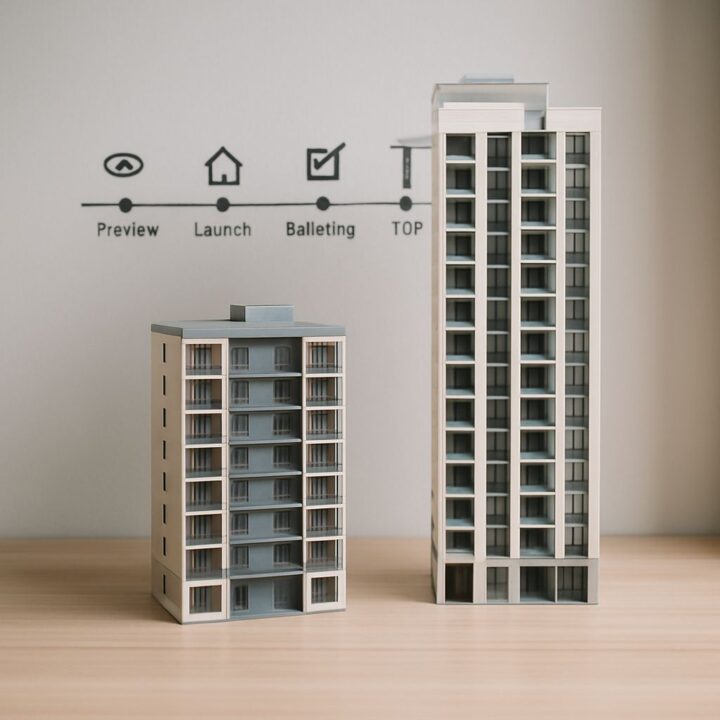
A new launch condo in Singapore runs through a predictable path from preview to TOP. Buyers who know the rhythm tend to feel more in control. You get a smoother journey, fewer surprises, and a clearer sense of what comes next. The path stretches over several years, yet each stage serves a purpose. Once the keys sit in your hand, the entire timeline feels worth the patience.