
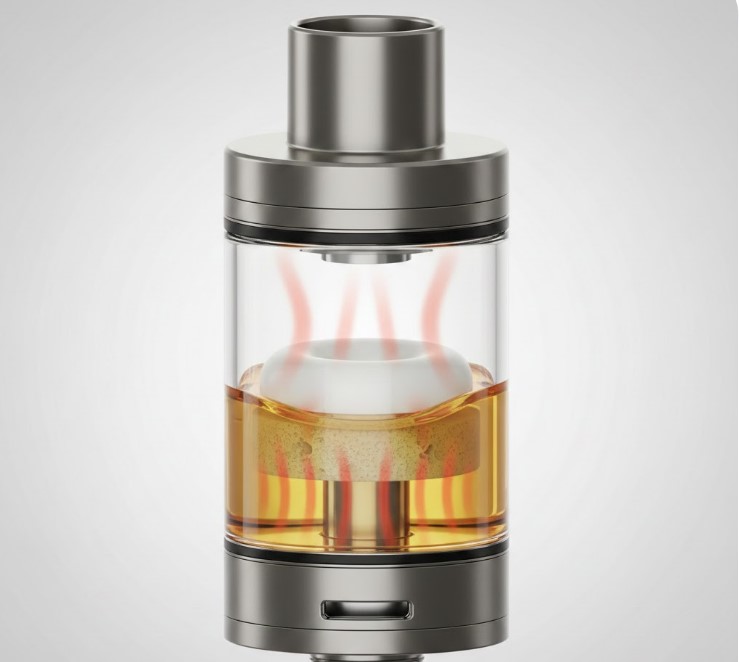
Have you ever noticed how modern vape devices manage to deliver smoother flavor with fewer burnt hits compared to older designs?
That improvement is not accidental. According to material science studies, ceramic heating elements distribute heat more evenly than traditional metal coils, reducing hotspots that degrade oils.
This small design change has reshaped how concentrates are vaporized.
Today, one of the most interesting applications of this technology is the ceramic coil placed at the base of postless vape systems.
Understanding how this heating method works reveals why these devices are becoming the preferred choice for both manufacturers and experienced users.
Understanding the Basics of Ceramic Heating Technology

Before diving into how ceramic coils function in modern vape systems, it helps to understand what makes ceramic a unique heating material.
Unlike bare metal coils, ceramic is porous, heat-stable, and chemically inert. These qualities allow it to heat gradually while maintaining a consistent temperature across its surface.
When electricity flows through the embedded heating element, the ceramic acts as a buffer, preventing sudden temperature spikes that can scorch oil.
This steady heating process improves vapor quality and preserves delicate compounds within oils.
Flavor compounds and cannabinoids are especially sensitive to overheating, so ceramic helps maintain their integrity.
Additionally, ceramic materials resist corrosion and oxidation, which contributes to longer coil lifespan and cleaner vapor over time.
Key benefits of ceramic heating materials include:
- Even heat distribution across the surface
- Reduced risk of burnt or harsh hits
- Improved flavor consistency
- Longer operational lifespan
Why Postless Vape Designs Changed the Game
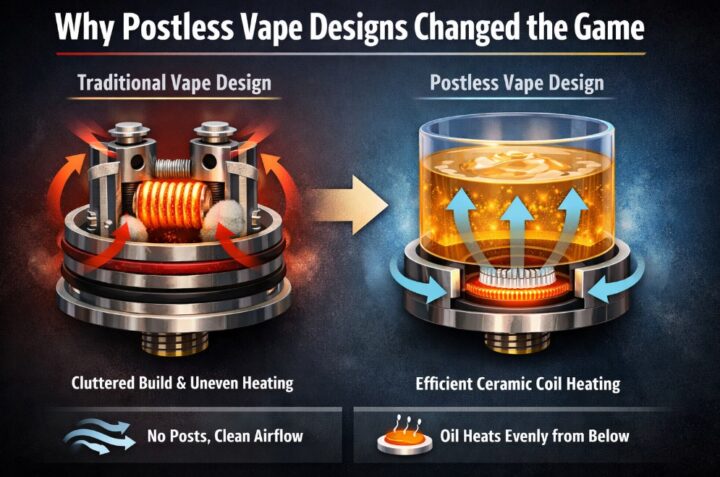
Traditional vape designs relied on visible posts to connect coils, which often disrupted airflow and caused uneven heating.
As design priorities shifted toward simplicity and efficiency, manufacturers introduced postless layouts that remove these vertical connectors entirely.
In these systems, the heating element sits directly at the base, allowing oil to rest naturally above it.
Modern postless vapes streamline airflow, reduce internal clutter, and allow ceramic coils to function more efficiently.
When paired with a base-mounted ceramic heater, oil is warmed from below in a controlled and predictable manner.
This design not only enhances vapor production but also improves reliability by minimizing loose connections and mechanical stress.
By simplifying the internal structure, postless systems give ceramic coils the environment they need to perform at their best.
How the Ceramic Coil at the Base Actually Heats Oil
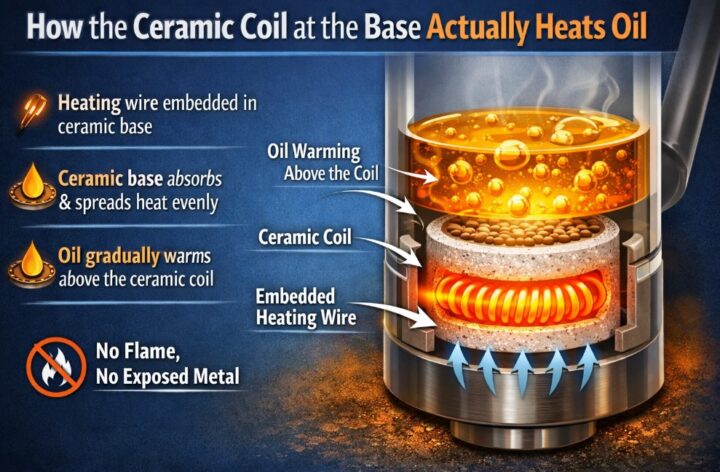
At the core of this system is a simple but highly refined process. When the device is activated, power is delivered to a heating wire embedded inside the ceramic base.
Instead of glowing hot instantly, the ceramic absorbs and spreads that heat evenly across its surface. The oil, resting directly above or slightly within the ceramic pores, warms gradually.
This bottom-up heating approach prevents direct flame or exposed metal contact with the oil.
As temperature rises steadily, the oil transitions into vapor without boiling aggressively.
The result is smoother inhalation and more controlled vapor density. Because the heat source is centralized at the base, gravity also plays a role, ensuring oil consistently feeds toward the warm surface.
This controlled interaction between heat and oil is what allows ceramic base coils to deliver consistent performance even with thicker concentrates.
Important technical note: Ceramic’s thermal conductivity is lower than metal, which is exactly why it excels at slow, even heating rather than rapid temperature spikes.
Temperature Control and Oil Preservation
One of the most overlooked advantages of ceramic base coils is how they support temperature control.
Oils contain volatile compounds that evaporate at different temperature thresholds.
Sudden overheating can destroy these compounds before they are inhaled. Ceramic coils help avoid that problem.
Because heat spreads evenly, temperature sensors can regulate power more accurately.
This allows devices to operate within an optimal range rather than cycling between too hot and too cool.
The result is better efficiency and less wasted oil.
Did you know?
Ceramic heating elements are commonly used in laboratory equipment for the same reason they are used in vape devices: precise and stable temperature control.
By preserving oil composition, ceramic base coils deliver more consistent effects and flavor across sessions.
Comparing Ceramic Base Coils to Traditional Metal Coils
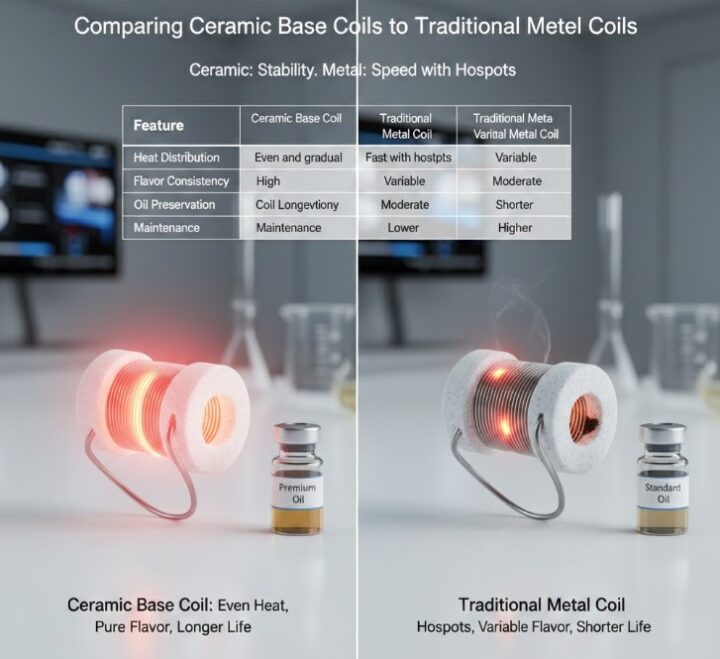
The difference between ceramic and metal coils becomes clearer when viewed side by side. While metal coils heat quickly, they often develop hotspots where oil can burn.
Ceramic, on the other hand, trades speed for stability.
| Feature | Ceramic Base Coil | Traditional Metal Coil |
| Heat Distribution | Even and gradual | Fast with hotspots |
| Flavor Consistency | High | Variable |
| Oil Preservation | Excellent | Moderate |
| Coil Longevity | Longer | Shorter |
| Maintenance | Lower | Higher |
This comparison explains why ceramic base heating has become the standard in premium devices.
While metal coils still exist, they are increasingly phased out in favor of ceramic alternatives.
Airflow Synergy in Postless Ceramic Systems
Heating is only half the equation. Airflow plays an equally important role in vapor quality. In postless designs, airflow channels are unobstructed by posts or protruding hardware.
This allows air to pass smoothly over the heated oil surface.
As air flows across the ceramic base, it picks up vapor evenly rather than pulling from one overheated spot.
This synergy between airflow and heating creates a balanced vapor density that feels smoother on inhale. It also reduces condensation buildup inside the chamber.
The combination of bottom heating and unrestricted airflow makes postless ceramic systems especially effective for consistent draws.
Every inhale feels similar to the last, which is something users quickly notice and appreciate.
Longevity, Maintenance, and User Experience
From a practical standpoint, ceramic base coils require less maintenance than traditional setups. Because ceramic resists residue buildup, oils are less likely to burn onto the surface.
This reduces clogging and extends usable lifespan.
Users also benefit from fewer leaks. Since oil naturally settles toward the base, it remains in contact with the heating surface without flooding airflow paths.
Cleaning routines become simpler, often requiring nothing more than gentle wiping and occasional dry burns if recommended by the manufacturer.
User experience advantages include:
- Fewer burnt hits over time
- Reduced cleaning frequency
- More predictable performance
- Improved device reliability
These factors contribute to why ceramic base coils are now widely preferred in modern postless designs.
Final Thoughts on Ceramic Base Heating in Postless Vapes
The rise of ceramic coils at the base of postless vape systems reflects a broader shift toward precision, efficiency, and user-focused engineering.
By heating oil gradually from below, ceramic elements preserve flavor, protect delicate compounds, and deliver smoother vapor.
When combined with a postless structure, the result is a clean, streamlined system that performs consistently session after session.
As vaping technology continues to evolve, ceramic base heating stands out not as a trend, but as a refined solution rooted in material science and practical design.
For anyone interested in understanding why modern devices feel more reliable and enjoyable, the ceramic coil at the base is a big part of the answer.