
Modern health-conscious markets demand transparency, safety, and verified quality for products such as CBD, dietary supplements, and pharmaceuticals.
Consumers increasingly expect proof that label claims match actual contents and that products are safe for use. Third-party lab testing provides independent verification of these expectations through unbiased analysis.
Third-party lab testing acts as a window into product quality and safety by confirming potency levels and screening for contaminants.
Documentation of these results typically appears through Certificates of Analysis, commonly known as COAs.
Access to these reports allows consumers to make informed purchasing decisions without relying on marketing language alone.
What Does Third-Party Lab Testing Practically Mean?
Third-party lab testing functions as an external checkpoint between manufacturers and consumers.
Independent laboratories analyze products without financial or operational ties to brands, which removes the incentive to alter or soften results.
Objective data replaces marketing language, allowing safety and accuracy to remain central priorities.
The primary purpose focuses on confirming that product contents match label claims while meeting safety expectations.
Laboratory analysis verifies potency levels and screens for harmful substances that may enter products during cultivation, processing, or storage.
Consistent application of these tests also supports repeatable quality across batches rather than isolated compliance.
Testing commonly addresses several critical categories during evaluation, including:
- Cannabinoid concentration such as CBD, THC, or CBG
- Chemical contaminants including pesticides and residual solvents
- Toxic elements such as arsenic, lead, cadmium, and mercury
- Microbial risks involving bacteria, mold, or yeast
Independent verification reinforces regulatory compliance while holding manufacturers accountable. Products supported by unbiased results signal commitment to safety, accuracy, and responsible production practices.

Why Independent Results Matter
Independent testing influences safety, trust, and legal stability across regulated and semi-regulated industries.
Reliable results protect consumers while discouraging shortcuts during production.
Consumer Protection
Consumer safety relies on early detection of contamination or mislabeling. Lab screenings identify issues before products reach shelves, reducing health risks.
Legal compliance also depends on precise measurements, especially for hemp-derived items.
Screening outcomes often include results that signal safety expectations:
- THC concentrations below 0.3 percent for hemp compliance
- Pesticide and heavy metal panels listing ND or Not Detected
- Microbial tests confirming absence of E. coli, salmonella, and mold
Clear documentation allows buyers to assess safety without relying on assumptions.
Industry Accountability
Ethical manufacturing depends on transparency. Brands offering public access to COAs demonstrate confidence in product integrity.
Companies relying only on internal testing or refusing disclosure raise credibility concerns.
Open reporting discourages inflated claims and encourages responsible competition.
Legal Risk Avoidance
Regulatory violations often stem from unreliable testing.
Non-accredited results may fail audits, trigger recalls, or lead to legal action.
Accredited analysis reduces exposure by delivering traceable and defensible data that regulators recognize.
Certificates of Analysis (COAs)
Certificates of Analysis translate lab findings into accessible documentation.
Each COA corresponds to a specific production batch and records verified results tied to that lot.
Many professionals describe a COA as a performance snapshot reflecting quality, safety, and compliance status at a specific point in production.
Companies like Iron Peptides, which offer COA-backed, third-party tested products, exemplify transparency and commitment to purity through their publicly available lab reports.

Key Sections in a COA
Each COA follows a structured format designed to support verification and traceability.
Several components deserve close review during evaluation.
Lab Information
Accredited laboratory identification establishes credibility.
ISO/IEC 17025 status confirms validated methods, quality controls, and technical competence. Contact details allow direct verification.
Product and Batch Information
Batch numbers listed must align with packaging labels.
Testing and manufacturing dates should remain current, typically within a one-year window, to ensure relevance.
Cannabinoid Profile
Cannabinoid analysis reports concentrations of active compounds.
Legal compliance depends on precise THC measurement for hemp-derived products.
Contaminant Test Results
Safety screening addresses multiple risk categories. Results should demonstrate compliance with accepted limits and absence of harmful substances.
Evaluation commonly includes:
- Pesticide detection with ND results expected
- Heavy metal thresholds for arsenic, lead, cadmium, and mercury
- Microbial analysis confirming pathogen absence
- Residual solvent testing for extracted products
Optional Terpene Profile
Terpene data supports aroma and flavor verification while offering insight into processing quality.
Red Flags in COAs
Certain warning signs suggest unreliable documentation.
Missing reports or outdated testing reduce confidence.
COAs issued by non-accredited or internal labs lack independent oversight. Incomplete panels or poor formatting further weaken credibility and traceability.
Role of Accreditation and ISO/IEC 17025
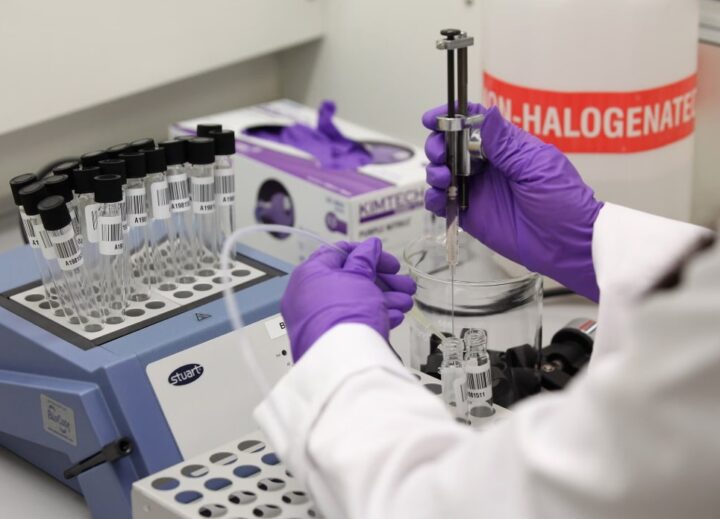
Accreditation represents independent assessment of laboratory competence and quality systems. ISO/IEC 17025 functions as the international benchmark for testing and calibration facilities.
Accredited status confirms consistent accuracy, validated methodologies, and traceable measurements.
Evaluation reviews technical expertise, equipment calibration, documentation practices, and quality assurance procedures.
Benefits tied to accredited laboratories include:
- Objective and impartial testing
- Global recognition of results
- Reduced compliance and recall risk
- Increased confidence among regulators and consumers
Strong accreditation reinforces trust and supports long-term brand reliability.
Analytical Testing Labs and Product Quality
Analytical laboratories support safety and performance by examining physical, chemical, and biological characteristics of products.
Advanced methodologies enable precise measurement across complex formulations.
Common techniques applied during analysis include chromatography, spectroscopy, stability testing, and contamination screening.
These services support multiple industries, such as:
- Pharmaceuticals
- Supplements
- Medical devices
- Environmental safety
Real-world impact appears clearly in extreme-condition research.
Cold-weather pharmaceutical stability studies conducted with the U.S. Air Force examined medicatio,ns including epinephrine and propofol at temperatures as low as minus sixty degrees Fahrenheit.
Analytical concentration data identified degradation risks under severe conditions. Third-party testing prevented potential failures during critical deployment scenarios.
Industry-wide benefits extend into daily manufacturing operations. Analytical verification supports GMP and GLP compliance while confirming label accuracy. Batch-level testing detects inconsistencies early, reducing recalls and protecting consumers.
Consumer Use of Lab Results
Consumer involvement strengthens product safety through informed evaluation.
Review of COAs prior to purchasing ingestible or topical products adds an essential layer of protection.
Effective review focuses on several verification steps:
- Confirmation of ISO/IEC 17025 accreditation
- Matching batch numbers between product and report
- Recent testing dates indicating current relevance
- Contaminant results listed as ND or within safety limits
Direct communication with laboratories offers added assurance when questions arise. Side-by-side review of COAs enables objective brand comparison without reliance on promotional claims.
Summary
Third-party testing and laboratory accreditation provide essential protection within loosely regulated markets such as CBD and dietary supplements.
COAs and analytical testing shift decision-making power toward informed consumers.
Transparent testing practices replace marketing promises with verified data. Demand for comprehensive third-party testing ensures safety, accountability, and confidence in product quality.