

Raising a Mini Goldendoodle requires planning, patience, and consistency. These intelligent and people-focused dogs respond quickly to structured routines, but early mistakes can create habits that are hard to change later. A clear timeline helps owners understand what to teach and when to teach it.
This Mini Goldendoodle training plan focuses on practical steps for the first week, first month, and first year. Each stage builds on the previous one so that training feels natural and manageable instead of overwhelming.
Preparing Before Your Puppy Comes Home

Good training begins before the puppy walks through the door. Preparing the home environment helps reduce stress and prevents confusion during the first days. Puppies learn faster when their surroundings stay consistent and predictable.
Choosing a reliable breeder plays an important role in early development. Puppies raised in stable home environments often adapt faster to routines and training. When researching mini Goldendoodle puppies for sale, many owners look for breeders with long experience and strong bloodlines, since temperament and early socialization have a major influence on training success. Breeders with decades of combined experience often produce well-balanced puppies that adjust quickly to family life and respond well to early guidance.
Essential supplies should be ready in advance:
- A properly sized crate creates a safe sleeping area and supports house training routines.
- Food and water bowls placed in the same location help build predictable habits.
- Soft bedding and chew toys reduce stress during the first nights.
- A lightweight leash allows early introduction to walking manners.
Puppies settle faster when the environment remains calm and structured during the first days.
First Week Training Goals

The first week sets the tone for everything that follows. Training at this stage focuses on routine rather than obedience. Puppies learn fastest through repetition and predictable schedules.
During this week, owners should concentrate on:
- Frequent bathroom breaks every two to three hours help prevent accidents indoors.
- Gentle crate introduction builds a sense of safety rather than confinement.
- Name recognition exercises teach the puppy to respond to attention cues.
- Calm handling sessions prepare the puppy for grooming and vet visits.
Training sessions should remain short, usually three to five minutes at a time. Several brief sessions throughout the day work better than one long session.
Mini Goldendoodles typically learn faster than many breeds due to their Poodle heritage, which ranks among the most intelligent dog groups according to the American Kennel Club.
Consistency matters more than perfection during the first week.
House Training and Daily Routine
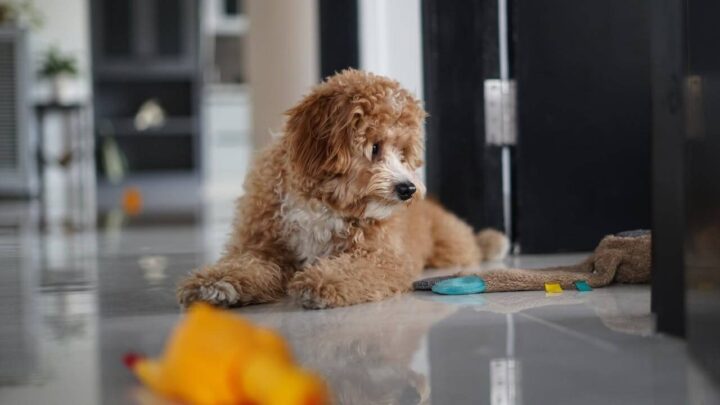
House training remains the most important priority during the early weeks. A predictable schedule helps puppies understand where and when bathroom breaks happen.
A typical daily structure might look like this:
| Time | Activity |
| Morning | Bathroom break immediately after waking |
| After meals | Short outdoor trip within 10–15 minutes |
| Midday | Play session and bathroom break |
| Evening | Walk and training session |
| Night | Final bathroom trip before sleep |
This routine works because puppies connect actions with timing. When meals, sleep, and outdoor breaks stay consistent, accidents decrease quickly.
Short praise sessions after successful outdoor trips reinforce the correct behavior. Food rewards should remain small and used only when needed.
Owners often see clear improvement within two to three weeks when schedules remain stable.
First Month Training Priorities
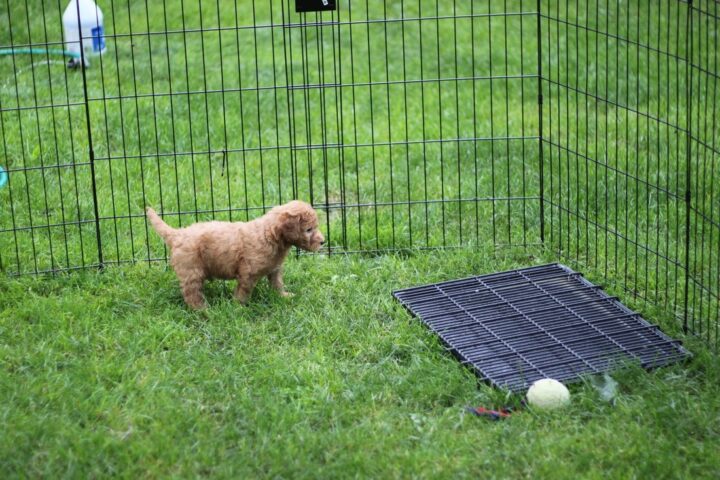
The first month builds on the routines established during the first week. Puppies become more confident and curious, which creates the perfect time to introduce basic commands.
Key commands to teach include:
- Sit remains the easiest starting command and helps build focus.
- Come improves safety and strengthens the bond with the owner.
- Down encourages calm behavior indoors.
- Leave it prevents dangerous chewing habits.
Training sessions can now extend to five to ten minutes. Two or three sessions per day provide enough repetition without causing fatigue.
Did you know?
Mini Goldendoodles often reach peak learning speed between eight and sixteen weeks of age. This period is sometimes called the social learning window because puppies absorb new experiences quickly.
Positive reinforcement produces the most reliable results during this stage.
Socialization During Early Development
Socialization helps prevent fear-based behaviors later in life. Puppies should gradually experience new environments, people, and sounds.
Safe exposure can include:
- Meeting calm visitors in a controlled home environment.
- Short car rides to reduce travel anxiety.
- Walking on different surfaces such as grass and pavement.
- Hearing household noises like vacuum cleaners and doorbells.
Exposure should remain positive and never overwhelming. Calm praise and small treats encourage confidence.
A well-socialized Mini Goldendoodle usually grows into a relaxed and adaptable adult dog. Training problems often decrease when socialization starts early and continues regularly.
Owners who skip this stage often face anxiety-related behavior later.
Training Progress Through the First Year

Training continues throughout the first year as the puppy matures into adolescence. Behavior may become less predictable around six to eight months when independence increases.
Training during this stage should include:
- Leash training that encourages calm walking without pulling.
- Longer recall exercises in fenced areas.
- Waiting politely before meals or door openings.
- Settling calmly during quiet household time.
Adolescent dogs often test boundaries. Clear rules help prevent confusion and maintain progress.
Short refresher sessions work well when behavior starts slipping. Repetition strengthens habits that were learned earlier.
Most Mini Goldendoodles reach emotional maturity between twelve and eighteen months.
Common Training Mistakes to Avoid
Many training problems develop from inconsistent expectations rather than difficult behavior. Avoiding common mistakes makes training smoother.
Owners should watch for these issues:
- Changing rules from day to day confuses young dogs.
- Punishment-based corrections often slow learning progress.
- Allowing rough play can encourage unwanted jumping.
- Skipping exercise leads to restless behavior indoors.
- Training only occasionally reduces retention.
Structured routines help prevent many of these mistakes.
Mini Goldendoodles respond best to calm direction and clear communication. Strong habits develop when expectations remain stable over time.
Even experienced dog owners benefit from sticking to a consistent training plan.
Conclusion
A structured Mini Goldendoodle training plan makes early puppy development easier to manage.
The first week focuses on routine, the first month introduces obedience, and the first year builds reliable behavior.
Consistent guidance and positive reinforcement create a confident and well-behaved companion. Owners who follow a steady timeline often see faster progress and fewer behavior problems.